












The computer speakers spout a stream of medical vocabulary lining up to form a diagnosis. The technical jargon went in one ear and out the other. As she turned to her parents on either side of her, though, the gravity of the situation was written all over their faces.
“I didn’t get mad, I didn’t cry, I was just breathing,” senior Micah Howard said.
Micah Howard had been diagnosed with papillary thyroid cancer, a label that would shift the trajectory of her life, as well as her family’s.
“It felt like a gut punch,” Micah’s father, Michael Howard said. “I would equate it to the feeling of dropping on a roller coaster, where I felt the emotion in my stomach first.”
Knowing her world was about to be flipped upside down, Micah Howard said she was eager to experience her daily routine.
“I just wanted to feel as normal as I could,” Micah Howard said. “I remember thinking to myself, ‘I’m going to get up, grab my keys and go to school. This is just a normal day.’”
Micah Howard said the label of cancer caused her to feel lost.
“At school I was trying to smile and not be negative, but on the drive home I began to dissociate,” Micah Howard said. “I wasn’t sad, but I had a hard time understanding my emotions, and the dissociation continued for about six months.”
In this time of uncertainty, Micah Howard said she leaned on her strong support system consisting of her parents, friends and cheer team, which she continues to pursue throughout her fight with cancer.
“It was a challenge to get through it and get back into the groove of things on the mat,” Micah Howard said. “I was lucky to have had the best teammates and such a good support system that they made it easier to come back to cheer without so much stress.”
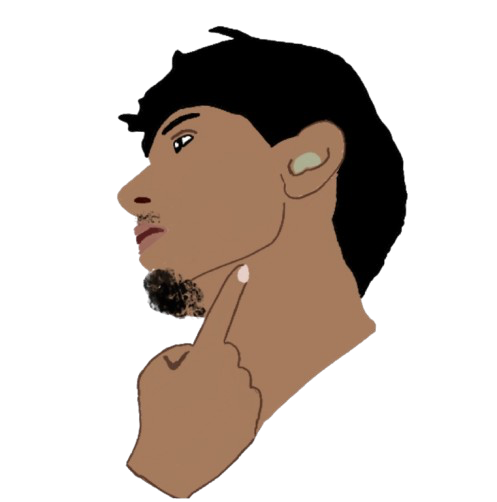
Micah Howard continued to practice and compete, rounding out her sophomore competitive cheer season. She underwent a total thyroidectomy in the summer before junior year, putting a short halt to her cheer training. Micah Howard said the surgery not only took a massive toll on her physically but attacked her self-identity.
“From what I remember, the recovery was horrible and I became so insecure about the scar,” Micah Howard said. “I hated seeing it.”
After recovering from the surgery, Micah Howard began the six-month process of radiation in October, which she said proved to be the biggest hurdle in the fight so far.
“For each radiation treatment, I was in a room alone for almost a week because I was too radioactive to be near anyone,” Micah Howard said. “The isolation really began to affect my mental health and I struggled to manage my emotions.”
Micah Howard said she began to experience problems with her memory.
“I really don’t remember anything from any doctor appointments,” Micah said. “I had a lot of memory issues and couldn’t remember a lot of important things, which was very hard for me, especially as a West Shore student.”
Even though cancer has greatly impacted Micah Howard’s life, her father said he has seen her grow exponentially throughout the situation.
“She learned that even with cancer, she could still live a fruitful life and understood that adversity can teach skills you’ll use for the rest of your life,” Michael Howard said. “Journaling became one tool for reflection—how she felt yesterday versus today, what changed and what she could do differently.
Micah Howard said she was determined to not allow her circumstances define her life, and she returned to cheer a few weeks before the doctor had predicted, not missing any competitions while reaching the national competition and placing second in their division.
“Receiving that medal made me feel extremely grateful for everything that happened that season,” Micah Howard said. “Even though some friendships weren’t as good as they were at the beginning of the season, I think we were all one big family in that moment.”
Now as a senior, Micah Howard has three-hour practices six days a week and is now part of three cheer programs: West Shore, All-Stars and Eastern Florida State College. Micah Howard’s All-Star coach Crystal Billins stepped into the head coach position at West Shore.
Being one of two seniors remaining on the West Shore team, Billins said Micah Howard has stepped into a crucial leadership role.
“Those two seniors have been the most resilient seniors that I’ve coached because of what they went through,” Billins said. “They could have just given up — and they chose not to.”
Micah Howard immediately caught the eyes of Billins due to her talent and dedication to the sport.
“She is the best all-around cheerleader I have on this team,” Billins said. “She loves [cheer]. It’s her outlet. She can stunt, she can tumble, she can fly, she can base and she can back spot. She can do anything. She’s a great athlete and also a great young woman who is going to make it very far in this world.
Micah Howard said Billins has become an important mentor, not only as a coach, but also in life.
“I used to be very quiet and do whatever everybody around me wanted me to do,” Micah Howard said. “[Billins] taught me how to be a leader, speaking up for myself and handling certain situations in the outside world.”
Continuing the trend of paying it forward, Micah Howard looks to continue her passion for cheerleading at the collegiate level while studying neuropsychology. She said to help others who experienced similar memory issues that she had.
“I had a lot of conversations with my psychologist about the tests they ran on me and later getting into the field myself,” Micah Howard said. “Hearing all the things they do in a day piqued my interest, and I want to help other kids who are just like me.”
As part of her senior project, Micah Howard has been creating a children’s coloring book with the goal of showing kids how to deal with the news of cancer.
“It helps them understand from the very beginning that it takes a team of support people to help you get through,” Micah Howard said. “If you commit to the three pillars of recovery — mental health, physical health, and nutrition—the outlook on cancer shifts to being positive.”
Although Micah Howard is in partial remission, her father said she no longer lets the label overshadow the person she has become.
“What comes out on the other side of adversity is a skill you can use for the rest of your life,” Michael Howard said. “She’s learned that there’s nothing in life that’s too difficult if you take the tools from one experience and apply them to the next. Adapt and overcome — that’s what we say. And she truly understands it now.”