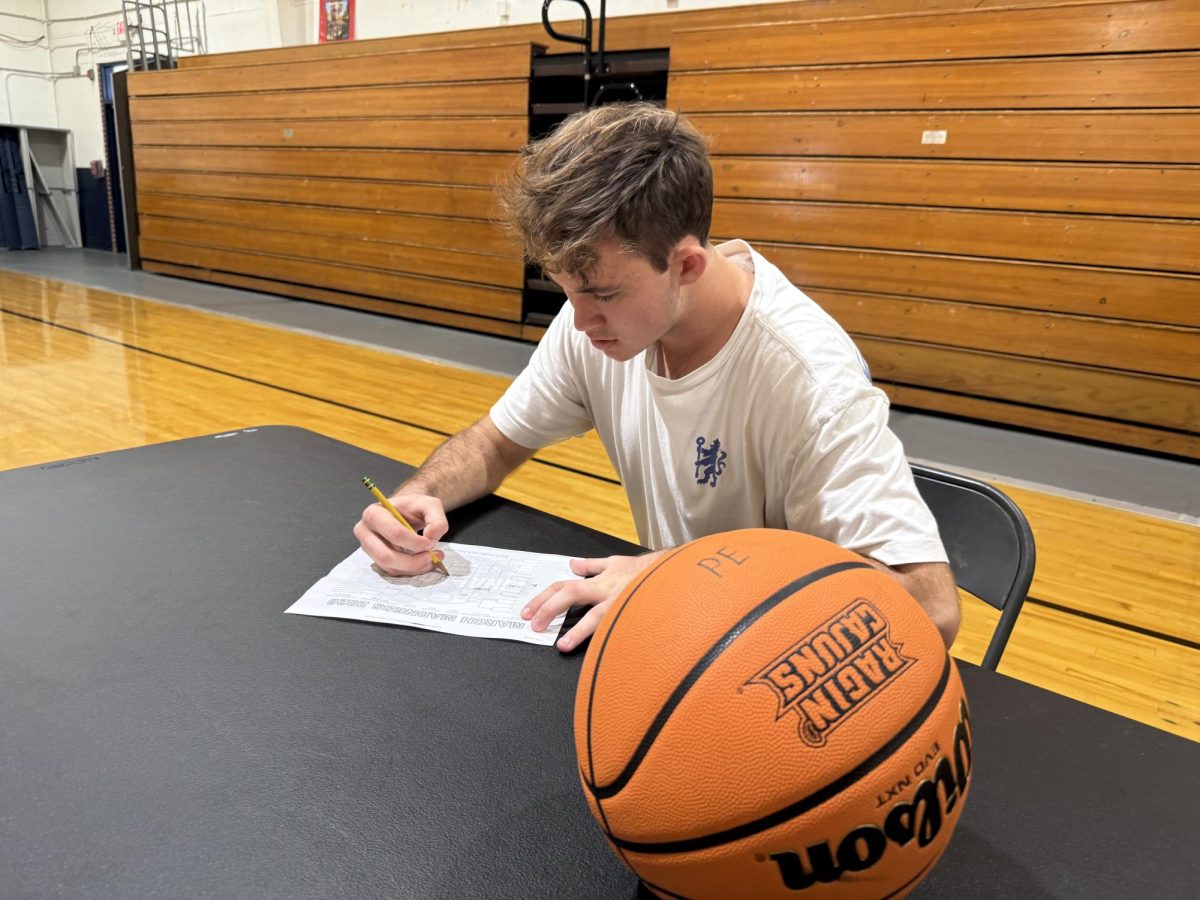













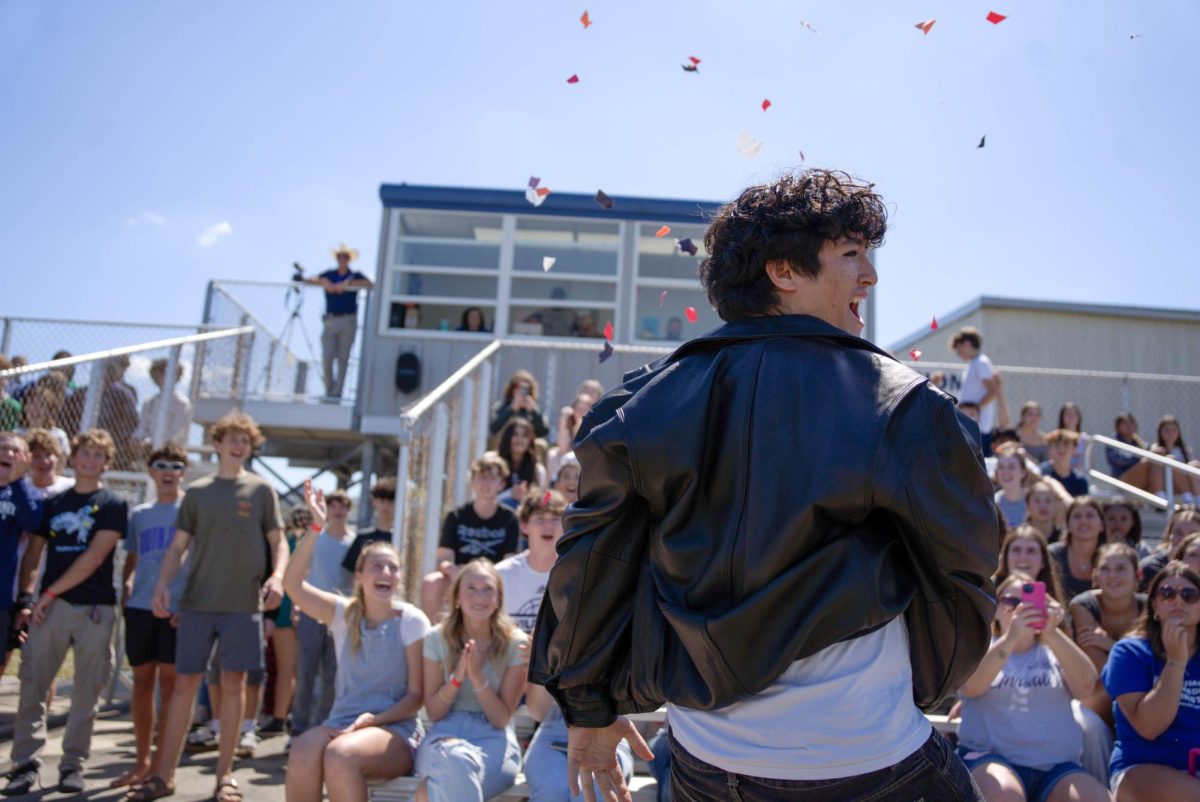



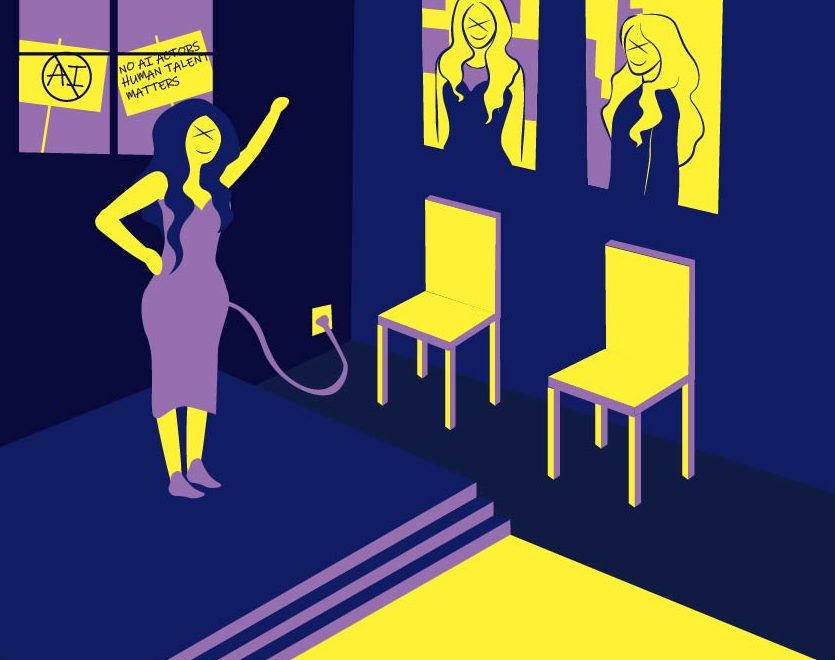
When the episode “Wildfire” from the police drama series “The Rookie” aired on Feb. 25, freshman Seth Braverman was excited, since his small role as a nephew of one of the main cast members brought him one step closer to his dream of becoming a professional actor. However, the creation of AI actors such as Tilly Norwood caused job security concerns for aspiring performers like Braverman.
“[With] the way that AI is progressing now [with the creation of Norwood], the acting industry might eventually fall, but currently I don’t think AI can properly portray human emotions,” Braverman said. “If it does end up destroying the industry, then I guess I have to plan a different job.”
Tilly Norwood is an AI actress created by the AI offshoot Xicoia of the production company Particle6. Particle6 is a corporation which specializes in AI generative technology for film and television, partnering with companies such as BBC, Daily Mail and Mihoyo. On July 30, Norwood was featured in a comedy sketch called “AI Commissioner,” posted by Particle6 TV on YouTube. As of Nov. 11, the video has reached 546,598 views. Particle6 CEO Eline Van der Velden said Norwood was made to be the next “Scarlett Johansson of the AI genre.”
“I see AI not as a replacement for people, but as a new tool — a new paintbrush,” Van der Velden wrote in a statement from Instagram on Sept. 28. “Just as animation, puppetry or CGI opened fresh possibilities without taking away from live acting. AI offers another way to imagine and build stories. I’m an actor myself, and nothing — certainly not an AI actor — can take away the craft or joy of human performance.”
On Sept. 27, Van der Velden announced at the Zurich Film Festival that Norwood was projected to be signed off by several talent agencies interested. Upon the announcement, Norwood soon faced backlash from the Screen Actors Guild–American Federation of Television and Radio Artists (SAG-AFTRA). Led by President Sean Astin, SAG-AFTRA represents up to 160,000 media professionals, including actors and recording artists, and advocates for stronger protections for occupations in the entertainment industry.
SAG-AFTRA posted an official statement on Sept. 30 titled “SAG-AFTRA Statement on Synthetic Performer” responding to the creation of Norwood, claiming they were opposed to the “replacement of human performers by
synthetics.”
“To be clear, ‘Tilly Norwood’ is not an actor, it’s a character generated by a computer program that was trained on
the work of countless professional performers — without permission or compensation,” the statement said. “It has no life experience to draw from, no emotion and, from what we’ve seen, audiences aren’t interested in watching
computer-generated content untethered from the human experience. It doesn’t solve any ‘problem’ — it creates the problem of using stolen performances to put actors out of work, jeopardizing performer livelihoods and devaluing
human artistry.”
In addition, SAG-AFTRA issued another statement on Oct. 9 advocating for AI protection legislation, including the No FAKES Act — which would “prohibit unauthorized digital replicas”, and the TRAIN Act — which would “require
transparency in training datasets.”
On Nov. 7, Van der Velden teased the production of up to 40 AI actors by Particle6 through an exclusive interview with Deadline.
Responding to previous criticism, Velden said in the interview that Norwood was made for positive intentions.
“Particle6 is there to be a force for good in the traditional filmmaking space,” Van der Velden said in the interview. “We help reduce budgets [up to 90%] so projects can enhance creativity with real actors. Plus, there’s the environmental element. It’s an 80% to 90% carbon footprint reduction if you use AI for certain shots. It’s also
safer in some instances.”
English teacher Ashur Wiedrich, who was a hired extra in the 2025 cop comedy film “The Naked Gun,” said he acknowledges the appeal of AI usage in the film industry.
“[AI actors will] always be on time [at the set], right?” Wiedrich said. “Then they’ll never be late. They won’t have drug issues. They’re cheaper to hire. There’s all these things business-wise, capitalism-wise, that are appealing to having AI actors and actresses. But it takes the art out of it.”
However, senior Cassidy Corey, who formerly participated in the theater program as assistant stage manager, said she believed AI replacements for acting disregarded “all of that human nature that [hired performers] put into the film industry.”
“I’ve seen this [feeling of hopelessness] from other people, not just actors, even people who want to be artists, everybody who wants to do these things that AI is now putting itself into,” Corey said. “Like I’ve seen it from people [who want to be creators]. They’ve been saying, ‘Oh, well I can’t go into art, that’s an AI-dominated field now.’ It’s watching a lot of these kids who have these very creative hopes and dreams and have these great paths laid out for
them say, ‘No I can’t, I have to go do something that will sustain me.’”
Corey said she believes human artistry is an important part of filmmaking.
“Human creativity gives the movies the tone of actually understanding humanity,” Corey said. “It’s actually knowing what humanity is all about and not just being like, ‘Hey look at us, we want money, hey look at us, we’re so cool, we’re [using AI actors] and we want money.’ It [shows that] you actually have something to say or you actually have a story to tell.”