

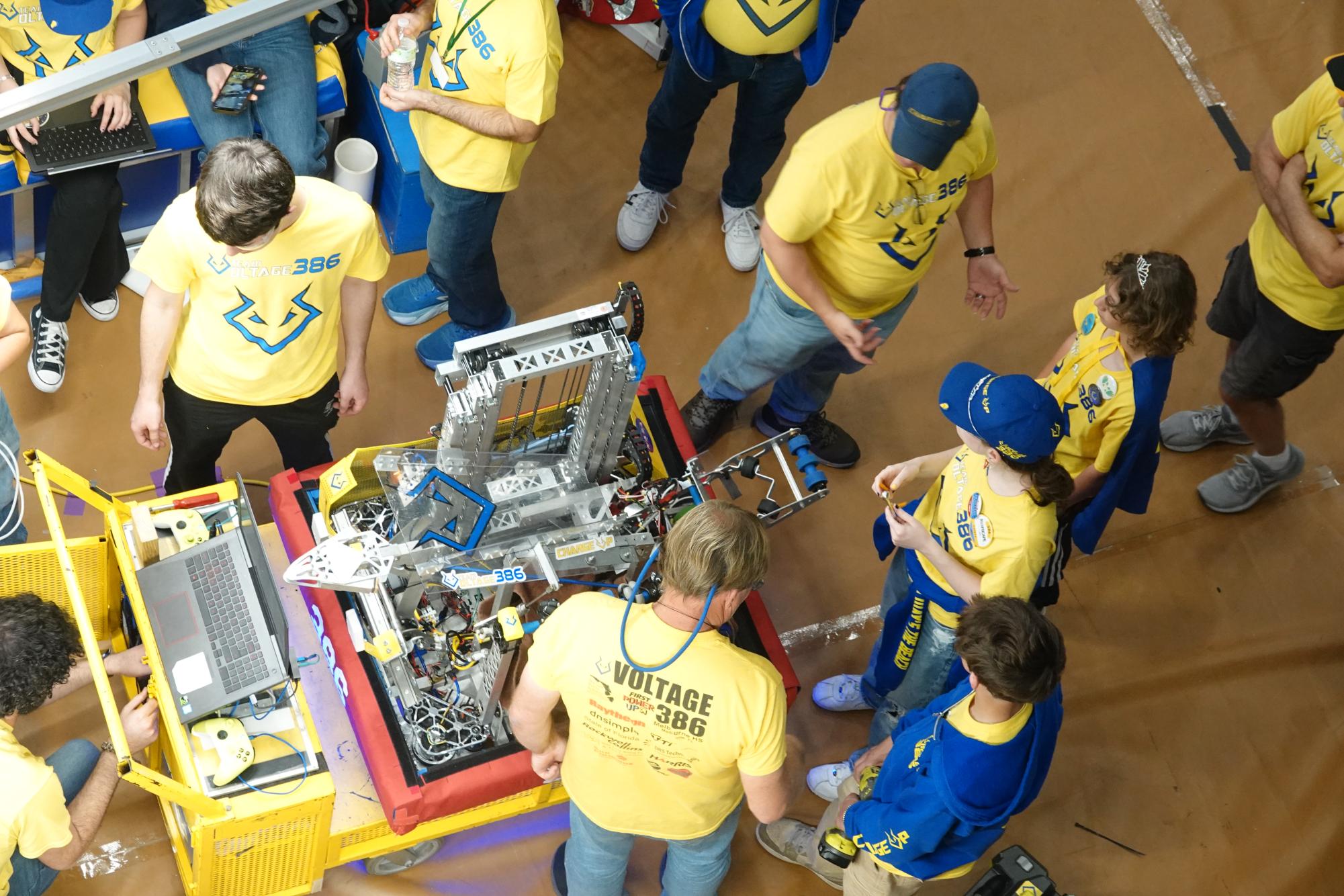
Bolts, nuts and screws clatter in the tool cabinet. Robotics members spend another day in the engineering classroom at Melbourne High School, hard at work to create a 115-pound robot that combines mechanical, electrical and software expertise. Team Voltage, and other robotics teams like them, represent a growing trend in hands-on technical education. Despite the various benefits and achievements robotics teams bring to Brevard, they are still severely under supported.
If given the same attention as a traditional varsity sport, robotics has the potential to bring more advantages to the school setting. The most prevalent robotics program on the Space Coast is FIRST Robotics Competition (FRC). Described as a “sport of the mind,” students involved learn both soft and technical skills. The FRC season starts in early January with a kickoff, where the game challenge is announced. Similar to a typical sports season, students are given a limited time period. Here, teams design, prototype and finally build a robot capable of both autonomous and player-controlled movement.
Although teams can apply for a monetary grant from Brevard Public Schools, this is where their support ends. There is a clear disparity between high schools and their respective robotics programs. Despite what one may think, West Shore does not have its own FRC team or robotics equivalent. Instead, Brevard hosts six teams: Team Voltage, The Pink Team, Horsepower, Bionic Tigers, Wingspan and Combbat.
Not every high school has proper facilities to safely house needed machinery, so teams are made up of multiple high school’s and homeschoolers. This means even within the West Shore student body, depending on where someone lives, students can have widely different experiences with robotics even within the same program. The Pink Team has their own dedicated space at Kennedy Space Center. Horsepower had a building constructed specifically for the team at Edgewood Jr./Sr. High School. Yet, Wingspan and Voltage are meeting out of classrooms. Additionally, each team accommodates students based on the region they live in, meaning socioeconomic background plays a huge role in how the team can function. Without proper resources, robotics teams spend more time struggling to survive rather than imparting skills to students, a core value of what this county stands for. If robotics was a varsity sport, these disparities would not be acceptable.
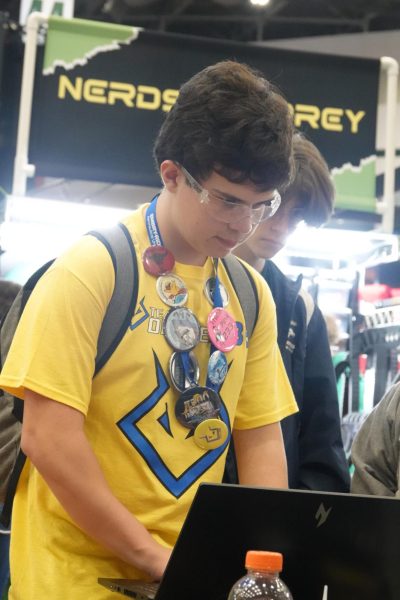
Furthermore, this lack of support culminated into a change in location for the Space Coast Showdown, Brevard’s off-season FRC competition. Annually attended by over 20 teams from across the state, The Pink Team has previously relied on the space given by Rockledge High School to support this. However, this year looked different. The Pink Team was treated like an external organization, and were asked to pay to use Rockledge High School facilities. Wingspan tried to step in, and pitched the event to Viera High School. They were also asked to pay to use any of the school’s space. This meant The Pink Team was forced to rent out a recreation center that had far less space available. The Frank T. Forester Recreation Center was unable to properly accommodate the 1,458 square foot playing field. This meant it was unsafe to walk near the field while the robots were in play, creating a potentially dangerous environment for spectators. Under Florida Statute 1013.15, Florida schools are allowed to charge money for schools to use spaces, depending on the group and event. However, school affiliated events and teams are normally able to use a school facility for little to no cost. If a varsity sport were to ask to use a facility for an event, there is a higher likelihood they would be given the space with little to no cost attached.
Varsity sports, such as football and basketball, are recognized across the county through spotlights, highlight videos and publicity. It should not be such a battle to receive adequate robotics support from the very school system that claims they “serve every student with excellence as the standard.” Robotics teaches skills in science, technology, engineering and math (STEM), a highly sought after career path, especially on the Space Coast. According to the National Association of Colleges and Employers, 80% of STEM college graduates are able to get a job within six months of graduating. On the other hand, only about 1% of student athletes will ever go pro. Giving robotics varsity sport recognition not only elevates recognition but elevates the community as a whole.
Recognizing robotics as a varsity sport is feasible. Michigan’s Novi High School gives students the opportunity to earn a varsity letter through participation and competition on a robotics team. The Minnesota State High School League recognizes FRC as an important aspect of the school curriculum, ranking their importance alongside traditional varsity sports. This recognition affirms that robotics is an integral part of the school culture, showing a major shift in the way robotics is perceived by the administration and student body. The culture surrounding robotics is based on support and respect, acknowledging how important these teams are in building students that gain real-world experience through team endeavors. Robotics deserves to be a varsity sport. Teams need to raise their voices and advocate for change, starting at the local level. Inviting leaders like school board members to build spaces and regional competitions allows them to see the impact robotics has on student’s lives. After all, this is more than just a club — it’s a competitive sport that requires discipline, mental endurance, teamwork and constant refinement of skills.